
Chronograph | Levrette | Monopusher | Silver | 1900

Series: GRAND COMPLICATIONS
By: Sílvio Pereira
Technical Sheet
- Lépine-type pocket watch. Chronograph. Dated 1900
- Functions: hours, minutes and chronograph
- Serial number: 238395
- Manufacture: Levrette
- Country: France
- Calibre: classic bridge layout. No. 1300712
- Movement protection: silver dust cover.
- Escapement type: Swiss lever
- Balance: bimetallic, temperature-compensated, with flat hairspring
- Power reserve: 36 hours
- Frequency: 18,000 vph
- Jewels: 23
- Case material: silver
- Dial: enamel, with no flaws or hairlines
- Small seconds: none
- Chronograph: central hand. Monopusher system operated by a button in the crown
- Case diameter: 52.4 mm
- Thickness: 14.7 mm
- Weight: 86.59 g
- The mainspring is wound by the crown at 12 o'clock.
- Hands: Louis XV-style hours and minutes. Set by the crown
- Numerals: Roman for the hours from 1 to 12 and Arabic for those from 13 to 24. Seconds: Arabic for the five-second intervals and indices for the rest.
- Crystal: in excellent condition.
- Case back number: 238395
Overall assessment - Monopusher chronograph watch in immaculate condition.
Chronograph | French | Monopusher | Silver | 1900


Chronograph | French | Monopusher | Silver | 1900


Chronograph | Grand Complication | 1905 | Gold


A brief history of chronographs

When it comes to the birth of the first chronograph, there are many stories. But everyone agrees on one point: from the very beginning, this complication has been able to magnetise the attention and passion of the watch world.
Why do we love chronographs? First of all, there is the romantic association that chronographs have with adventure. From the Breitling Navitimer chronographs worn by pilots to the Omega Speedmasters that allowed the Apollo 13 astronauts to navigate safely in their spacecraft, chronographs have empowered us over time and, on occasion, have even saved our lives.
Chronographs can help us calculate pulse rates, the speed of objects over a kilometre, the distance of an approaching storm and even exchange rates. But beyond all this pragmatism, there is a more poetic side to the chronograph that goes straight to our human experience. Because in an existence made up of fleeting moments, the chronograph allows us to freeze a moment of eternity and remember it forever.
What is a chronograph?
A chronograph is any watch that can measure elapsed time using an independent hand. Chronographs beat at anything from 18,000 vibrations per hour, which can measure times to 1/5 of a second, up to 7,200,000 vph, which records times of 1/2,000 of a second.
A chronograph mechanism works like the “drive train” of a car. The watch movement, or base calibre, is like an engine that supplies a constant flow of energy. The mechanism of column wheel, levers and wheels that transmits energy from the movement to the chronograph works like a car's transmission.
Once a chronograph is started, a coupling system brings the chronograph wheel into contact with a moving driving wheel, which sets the seconds in motion. When the chronograph is stopped, the coupling system removes the chronograph wheel from this drive and the seconds hand stops.
The birth of the chronograph
When it comes to the birth of the first chronograph, there are many authors and rumours to be addressed. In this respect, several watch manufacturers have ostentatiously put forward dates and models with such meticulous exactness that it leaves even the most rigorous historian perplexed. In any case, we can be certain of one point: from the very beginning, this complication has been able to magnetise the attention and passion of the world of watchmaking enthusiasts.
The term “chronograph” comes from the Greek words “chronos”, or time, and “graphos”, meaning to write. Although the British watchmaker Graham (1674-1751) invented the first watch that measured time, in the first decade of the 1700s, the first chronograph proper was invented by Louis Moinet in 1816 to assist in the operation of astronomical equipment.

George Graham (1674-1751)

Louis Moinet (1768-1853)
Indeed, a few years ago, the history of watchmaking was rewritten following the discovery of a pocket watch which came to be regarded as the first chronograph ever produced. In 1816, Louis Moinet, a French watchmaker and painter, completed what he called the “Compteur de Tierces”. This extraordinary instrument, whose name literally means “counter of thirds”, measures events to the 60th of a second, shown by a central hand. The seconds and minutes are recorded on separate subdials and the hours on a 24-hour dial. In addition, it is powered by the first high-frequency mechanical movement, running at an incredible 216,000 vibrations per hour, and it features a return-to-zero function. Without doubt, the work of a genius far ahead of his time.


First chronograph created by Louis Moinet - front and mechanism
Short video illustrating the creation of the chronograph
The passion for games is as old as mankind. But more importantly, it raised the problem of the need to create a reliable instrument for measuring a set time. Let us go back in history once more. At the end of the 18th century, in England, when the Jockey Club, which is still today the largest commercial organisation in British horse racing, was first created, it organised a competition of speed and agility that required an instrument to measure precisely the participants' start and finish times.
In September 1821, the French watchmaker Nicolas Mathieu Rieussec invented a timepiece for timing horse races. At a meeting held in October of that same year, the French Academy of Sciences, chaired by Antoine-Louis Breguet and Prony, reported on the invention that Rieussec had presented, naming it the “Chronograph with Seconds Indicator”. On 9 March 1822, he received the patent that officially sanctioned the operating principles of this instrument, which dropped a small spot of ink on the dial to mark the elapsed time. Hence chronos, meaning time, and graph, meaning writing.

Nicolas Mathieu Rieussec (1761-1866)
Basically, it was a timepiece that “wrote” time, and so from that moment on the term “chronograph” was adopted. Technically speaking, the chronograph had obvious drawbacks, such as marking only short periods of time. It also required frequent maintenance, which meant filling the ink reservoir and cleaning the porcelain dial after use. Despite these drawbacks, it unexpectedly remained in production for a long time, even though research seeking better solutions had been carried out from the outset.

Nicolas Rieussec's chronograph and patent of 1821
The first chronograph with a seconds hand that could be started, stopped and reset to zero was created in 1862 by Adolphe Nicole in Switzerland.
Around 1910, companies began to miniaturise pocket watches into wrist chronographs. These wrist chronographs were a requirement of those working in the military, in aviation and in motor racing. In 1933, Breitling patented the first chronograph system to use separate start, stop and reset pushers.
It is important to stress that the chronograph has been linked to sport from its birth to the present day. Thus, besides exemplifying a precious and iconic object, the chronograph represents the technical reference instrument for measuring time in the most varied sporting events.
In February 1822, the London-based watchmaker Frédérick Louis Fatton developed an ink chronograph with a fixed marking system, which earned him a patent. Even the master watchmaker Abraham-Louis Breguet had, two years earlier, worked on two double chronometers, referred to as “d'observation”, anticipating the concept of rattrapante watches.

Louis Frédéric Perrelet (1781-1854)
Louis Frédéric Perrelet, a Swiss watchmaker established in Paris, designed a “physics and astronomy chronograph counter”, for which he was granted a patent in 1828.
The Rattrapante

Rattrapante chronograph
Also called a split-seconds chronograph or Doppelchronograph, a rattrapante has two seconds hands for the chronograph function, which move together. The extra hand can be stopped independently by pressing a button in order to measure intermediate times. After another button is pressed, it will return beneath the chronograph hand to continue together with it. In this way, it becomes possible to measure further intermediate times. This is the origin of the word “rattrapante”, which is based on the French verb “rattraper”, meaning “to return”.
The rattrapante was invented in 1831 by the Austrian watchmaker Joseph-Thaddeus Winnerl, who added a heart-shaped piece to his improved version in 1838. In 1923, Patek Philippe produced the first rattrapante chronograph wristwatch, and the company is still one of the great specialists in this complication.

Joseph-Thaddeus Winnerl
Without doubt, chronographs exerted a strong influence, with growing interest in the development of new, innovative mechanisms, although at that time the results were not aimed at large-scale production.
The turning point
The turning point in modern watch design was revealed in 1844: a Swiss watchmaker based in London, Adolphe Nicole, developed a system that allowed the hand to return to zero, which earned him a patent: the ‘cam-actuated lever’, heart-shaped. Even today, this system remains in many chronograph mechanisms. Almost twenty years later, Féréol Piguet devised a mechanism that incorporated a return function. This discovery earned the manufacturer Nicole & Capt a patent, thus launching the first pocket watch to display the three basic functions that we would later find in all modern chronographs: start, stop and reset to zero after indicating the elapsed time. At this point, the history of the chronograph stops, takes its time, and waits for the next revolution to shake the very foundations of the watchmaking world.

Chronograph mechanism created by Adolph Nicole in 1862
And the first wrist chronographs appeared
At the beginning of the 20th century, on the winter nights of the First World War, the few soldiers who decided to leave the front lines and go down into the endless, muddy trenches immediately understood the great disadvantages of pocket watches. At the same time, aviators also felt the need to read the time quickly and simply while flying their aircraft. Hence the birth of the first wristwatches. Obviously, chronographs could not remain indifferent to this “modern trend”. It is therefore no coincidence that the first chronograph wristwatches were originally pocket watches “adapted” to this use by soldering “lugs” to the case and reprinting the indications on the dial. However, watchmakers had to take watch design to the next level, making movements as small as possible. In 1910, Moeris launched the first 13-ligne calibres developed for small watch cases, slightly larger than 29 millimetres. It was soon followed by other manufacturers such as Landeron, Lemania, Universal, etc. However, we are still talking about mechanisms activated by a single pusher, which sequentially controlled the start, stop and reset functions.
The modern era of the chronograph officially began in 1933, when Breitling obtained patent No. 172129. The advertising campaigns presented the first wrist chronograph with two pushers: one for start and stop, the other for the return function, which was in fact an extension of a pocket watch patent registered in 1923.

First Breitling wrist chronograph, 1933
The Flyback
The history of the modern chronograph began its endless quest for maximum precision and reliability in timekeeping. The year 1936 welcomed a new innovation: the hands returned to zero without the need to stop the chronograph. The patent - No. 183262 - for this mechanism, referred to as flyback, belongs to Longines. Other developments then followed, aimed at making movement construction easier and less costly. To achieve this result, the column wheel, which until then had controlled the switching functions, was removed.

First Longines Flyback, 1936
In 1937, Landeron - patent No. 209394, registered in 1940 - launched a three-pusher mechanism, one for each function.

Landeron three pushers, 1940
From then on, the evolution of chronographs took off at great speed, but perfectly in keeping with the traditional standards of high-end watchmaking: hand-wound or automatic movements, two pushers, two or three subdials, column wheels and a cam gear mechanism for the transmission of energy.
1969 saw the introduction of the world's first automatic chronograph movements. At the 1969 Basel Fair, Zenith unveiled its El Primero movement, the chronograph with the fastest oscillator in the world at 36,000 vibrations per hour.

Zenith "El Primero" 1969
At that same fair, Breitling, Hamilton Buren and Heuer-Leonidas jointly unveiled their legendary Calibre 11 automatic chronograph movement, and Seiko presented its calibre 6139, the first full-rotor, vertical-clutch, column-wheel chronograph with a single subdial.

Breitling Calibre 11 - 1969

Seiko 6139 - 1969
In 1987, Frederic Piguet gave us the smallest and thinnest automatic chronograph movement in the world, with a thickness of just 5.5 mm. These movements were housed in watches such as Blancpain's exquisite ultra-thin chronographs and are still today an industry standard in terms of elegance.
The most recent innovations in the chronograph mechanism have focused on increasing the speed of the oscillator to allow fractions of a second to be recorded. Leading the way is TAG Heuer, which has launched a series of innovative chronographs, including its Mikrotimer Flying 1000, which divides time into 1/1000th of a second, and its Mikrogirder, which reaches an astonishing 7,200,000 vph and a reading of 1/2,000th of a second.

Tag Heuer Mikrotimer Flying 1000

Tag Heuer Mikrogirder
There is also Montblanc's TimeWriter II Chronographe Bi-Fréquence 1000, which measures 1/1000 of a second by means of a retrograde display at 12 o'clock.

Montblanc TimeWriter II Chronographe Bi-Fréquence 1000
Chronograph counters

In addition to a seconds hand (A), most chronographs have a series of subdials that indicate elapsed time beyond 60 seconds.
The minute counter is the most basic type of additional counter and is found on almost all chronographs. There are two types of minute counter. The first is a subdial (a small dial located on the main watch dial) usually calibrated to 30 (B) or 60 seconds.
Each time the chronograph passes the 60-second mark, the chronograph's minute counter will advance one minute to give a reading of the elapsed minutes. A second kind of minute counter uses a hand mounted on the central axis that advances one minute each time the seconds hand passes the 60-second mark. This minute counter is calibrated for 60 minutes and offers greater legibility.
The hour counter (C) on a chronograph is an optional but very useful additional dial. For example, we like to start our chronographs at the beginning of a long flight and stop them when the flight ends, so that we can tell our total time in the air.
An hour counter gives you a reading of the elapsed hours, which is perfect if you have just woken up and need a quick reference for how long you have been in flight. Hour counters are usually calibrated with 12-hour scales and are located on subdials.
As the chronograph's seconds counter is such an important precision instrument, it would be confusing to place a seconds hand on the watch's central axis as well. As such, most chronographs place the seconds hand on a small subdial (D).
The main purpose of this hand is simply to show that the watch is running. Several manufacturers have discarded this hand to free up dial space or replaced it with another function, such as a moon phase, as in Blancpain's Chronograph Monopoussoir,

Blancpain Chronograph Monopoussoir
or with a simple date, as in Cartier's Calibre Chronographe.

Cartier Calibre Chronographe
Iconic chronographs
Zenith El Primero

Breitling Navitimer

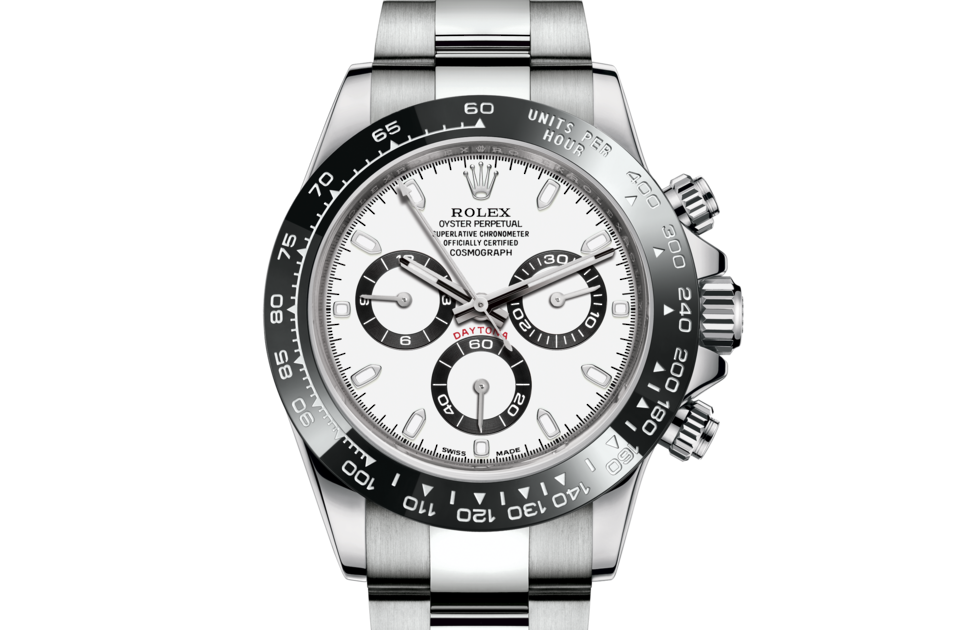
Rolex Cosmograph Daytona
Omega Speedmaster Moonwatch

Citizen Bullhead

Seiko 6139

Tag Heuer Carrera

Tissot Navigator

To better understand and follow the many stages in the development of chronographs over time, words alone are not enough. With that in mind, we invite the reader to look at, and feast on, the 88 epic models that made up the 2016 auction Start Stop Reset.


Comments