
The Biological Clock and the Mechanical Clock

Sílvio Pereira

Two systems of time, one and the same human obsession
When time is not just time
Watchmaking has always been more than the measurement of time. From the first sundials to today's highly complicated mechanical calibres, the act of measuring time reflects a deeply human concern: to understand, master and give meaning to the passing of life. Yet there is a paradox rarely explored in horological discourse: while we perfected ever more precise instruments to measure outer time, for decades we ignored inner time — the biological clock.

Today, in the light of scientific knowledge and social change, it has become clear that two distinct temporal systems coexist within us: mechanical time, regular and abstract, and biological time, rhythmic, adaptive and profoundly human. The relationship — often a conflictual one — between these two times deserves serious reflection, above all in a world such as watchmaking, which lives on precision but also on emotion.
The biological clock: time written into the body

The biological clock is not a poetic metaphor. It is a real physiological system, with a neurological, genetic and hormonal basis. In human beings, its main regulating centre is located in the suprachiasmatic nucleus of the hypothalamus, a small brain structure that receives information directly from the retina. Natural light is its main synchroniser, adjusting the organism to the day-night cycle.
This system regulates the so-called circadian rhythms, with a periodicity of roughly 24 hours, which are responsible for essential functions:
sleep-wake cycles
body temperature
the release of melatonin and cortisol
cognitive performance and attention
energy metabolism.

Unlike the mechanical clock, the biological clock does not measure hours, minutes or seconds. It organises physiological sequences in time, and favours functional fitness over mathematical exactness. It is a qualitative time, geared towards survival, regeneration and balance.
Mechanical time: the invention of absolute regularity
The mechanical clock represents one of humanity's greatest technical achievements. From the moment time came to be divided into fixed units, it became possible to coordinate complex societies and to organise work, trade, transport and science. Regularity became synonymous with progress.

This regularity, however, comes at a cost. Clock time is:
linear
uniform
indifferent to biological context
immune to fatigue, age and emotion.
A second always lasts exactly the same, whether we are exhausted, ill or in love. This neutrality, essential to science and industry, becomes problematic when it is applied to human life without mediation.
In its pursuit of absolute precision — certified chronometers, high frequencies, microscopic tolerances — watchmaking became the ultimate symbol of this ideal of homogeneous time.
The modern conflict: when the clock rules the body
For much of history, social time kept fairly close step with biological time. Sunrise and sunset dictated the rhythms of work and rest. Industrialisation and, later, electrification broke this balance.
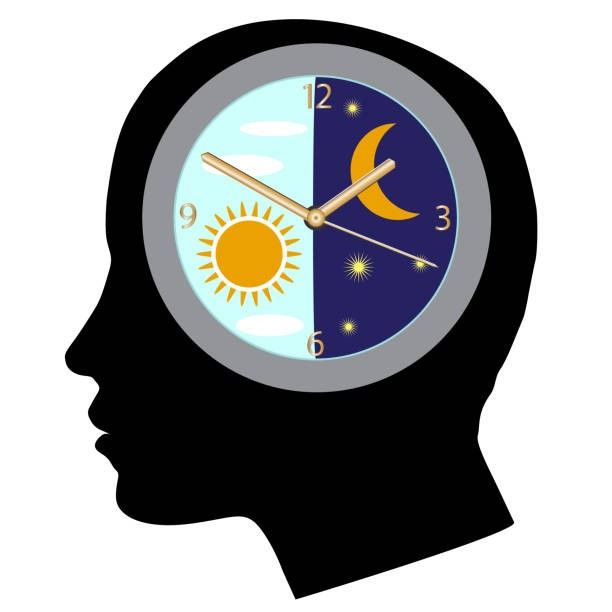
Today we live under the dictatorship of the timetable:
artificial alarm clocks
shift work
chronic jet lag
constant exposure to artificial light
productivity cut off from natural rhythms.
The consequences are widely documented: sleep disorders, stress, reduced cognitive performance, depression, cardiovascular and metabolic diseases. Put simply, the body pays the price for obeying a clock that was not made for it.
In my view, this is one of the great paradoxes of our time: the more precise clocks become, the more out of sync human beings become.
A horological irony: the mechanical draws closer to the biological
Curiously, when we look at a high-quality mechanical movement, we find surprising parallels with the way biology works. A calibre does not run continuously, but through rhythmic oscillations. The regulating organ — balance and hairspring — beats, rests, beats again. There is cadence, not absolute linearity.
A movement running at 28,800 vibrations per hour lives on micro-cycles, just as the human organism lives on internal rhythms. Both are sensitive to disturbances: shocks, temperature and magnetism in the case of the watch; stress, artificial light and diet in the case of the body.
In this sense, traditional mechanical watchmaking is philosophically closer to the biological clock than to continuous, impersonal digital time.
Contemporary luxury: respecting human time
In a market saturated with technology, true luxury is no longer extreme precision but meaning. A haute horlogerie mechanical watch is not bought because it is more accurate than a smartwatch, but because it offers:
an emotional relationship with time
a rhythm of its own
a sensory and contemplative experience.
The wearer of a mechanical watch accepts — consciously or unconsciously — that time need not be absolute to be valuable. They accept deviations, imperfections, pauses. This is far closer to biological logic than to the digital obsession with total exactness.
I would argue that contemporary watchmaking has a conceptual opportunity here: to reposition itself not as a mere measurer of time, but as a mediator between external time and human time.
A new awareness of time
In recent years there has been growing interest in subjects such as chronobiology, sleep, circadian rhythms and well-being. This trend is no accident. It is a reaction to decades of self-inflicted temporal violence.
In this context, the wristwatch can take on a renewed symbolic role. Not as an instrument of control, but as a reminder that time should be lived with rhythm, not merely counted.
Perhaps the future of watchmaking lies less in raising frequencies and more in inspiring pauses.
Reconciling two times
The biological clock and the mechanical clock represent two legitimate ways of organising time, but they belong to different domains. The problem lies not in the existence of the clock, but in its hegemony over the body.
True contemporary sophistication lies in the ability to align social time with biological time, without giving up either technique or humanity. Watchmaking, as the art of time, has not only the capacity but also the responsibility to take part in this reflection.
In the end, the most valuable time is not the time measured with the greatest precision, but the time lived in harmony.
Recommended reading
1. Russell G. Foster & Leon Kreitzman
Rhythms of Life: The Biological Clocks that Control the Daily Lives of Every Living Thing Yale University Press
The most balanced work, combining scientific rigour and clarity of exposition, on how the biological clock works. Essential for understanding internal time as a system of regulation rather than mere counting.
2. Till Roenneberg
Internal Time: Chronotypes, Social Jet Lag, and Why You’re So Tired
Harvard University Press
Introduces the concept of social jet lag, crucial for understanding the modern conflict between the mechanical clock and the biological clock.
3. David S. Landes
Revolution in Time: Clocks and the Making of the Modern World
Harvard University Press
An essential reference for understanding how the mechanical clock shaped social organisation and imposed a uniform time on the world.
4. Norbert Elias
Sobre o Tempo
Relógio D’Água
A short, clear and highly pertinent text on time as a social construction — ideal for a critical framing of the role of the clock.
5. Byung-Chul Han
O Aroma do Tempo
Relógio D’Água
A contemporary essay that links acceleration, loss of rhythm and the dehumanisation of time — fully in tune with current reflection in watchmaking.


Comments