
Time is dead. Long live time.


Einstein wore a Longines wristwatch that was probably given to him in 1931 and was sold in 2008 for CHF 74,000.
It was with this Longines on his wrist that he concluded that time does not pass uniformly: it passes more slowly in the valley than on the mountain. The difference is minimal, yet nothing that the Cesium 133, an atomic wristwatch, cannot measure, since it loses only one second in 1,000 years. The idea that time is not the same for all humans is shocking, just as the ideas that the world is not flat, or that the sun does not revolve around the earth, once were; the strangeness comes only from errors of perception.

We still cannot read the universe well; we do not know its most basic grammar. Einstein may have found this perception easier, since as a young man he worked at the Federal Intellectual Property Office in Bern, where he dealt with patents on the synchronisation of clocks between railway stations. 77 years after Einstein's birth and 421 km from Bern, in Verona, the physicist Carlo Rovelli was born, who in his book “The Order of Time” sets out, as clearly as possible, the idea that time as we know it has died. Layer by layer, Rovelli demolishes every idea we have about the mechanism of time: it is not unique, it has no direction, the present makes no sense in the universe, and time cannot be seen as independent. He begins with the idea that time is not unique: in the valley, where the effect of gravity is stronger than on the mountain, time is slower.
On the Alentejo plain, therefore, one ages more slowly than at the top of the Pico volcano.

He moves on to the idea that time has no direction. Past, present and future do not necessarily follow this order: if I look at the Cesium 133 and see 12:00, what I see is the light travelling from the hands to my eyes; I see 12 o'clock as it was a nanosecond ago, and the present does not always coincide. My present is other people's past. So what is time? The past no longer exists, the future has not yet existed, and the present, does it exist? What is the present? This very second? This millisecond? Planck defines time as measurable down to 10⁻⁴³
seconds; for smaller fractions a theory of quantum mechanics is needed. He ends with the idea that time is not independent: it varies according to a set of factors such as gravity and speed. Rovelli tells several stories about those who argued that time does not exist, such as that of Leibniz, who removed the “t” from his name (formerly Leibnitz) as a way of stressing that time does not exist. For Aristotle, time was the measure of change in things; it was intimately bound to things, to events. It was Newton who first suggested the existence of a theoretical, independent time that flows by itself. This is still our idea of time. Aristotle said that time is the measure of things, Newton said that time flows by itself, and Einstein that time is neither unique nor independent; time was taken away from things, theorised and then destroyed as a concept: it is not a good mechanism for measuring events or changes.
Time is dead. So how does the universe work without time? What do watches measure?
Quantum mechanics seems to be the only solution, so let us turn our attention to very small particles. We all know that there are atoms made up of electrons, protons and neutrons; we all learned that electrons are negatively charged particles. If we want to observe an electron we can do so, which leads us to believe that it behaves like a particle that can be located in time and space. Here, too, there is a problem of perception: the theory has recently been put forward that electrons behave like waves and that, when they are observed, the wave function collapses; in other words, when they are not observed, they cannot be precisely defined in space and time. We are the result of a cluster of very small particles in which time has no place. Einstein killed the time that Newton left us and that our parents and teachers taught us; now we are left with a non-existent time, like the Nonexistent Knight of the writer Italo Calvino.
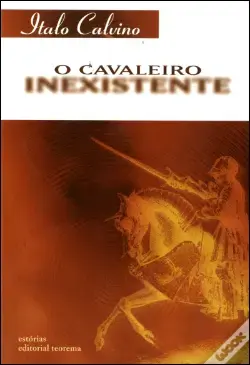
The Nonexistent Knight belongs to the trilogy “Our Ancestors”; it is the story of a knight who simply did not exist. He wore a helmet and rode a horse, but he did not exist. Inside his armour everything was filled with nothing; when he ate, since he did not exist, he merely cut his food into ever smaller pieces. Division inevitably leads to non-existence: if we divide hours into minutes, minutes into seconds, seconds into milliseconds and so on down to Planck time, time loses its reason for existing; it ceases to be perceptible. The knight divided his food into ever smaller pieces, keeping his companions company until they had finished their meals. After the meal he went into battle, where he observed every protocol; he was perfect, precise, relentless, just like the idea we have of time. One day he grew tired of not existing, opened his helmet and went away. Realising this, another knight, this one of flesh and blood, seized the opportunity to climb inside the abandoned armour. The Nonexistent Knight was perfect and, of course, had a Dulcinea on his trail, sadly much troubled by the idea that her beloved did not exist. It was a moment of great happiness when his Dulcinea was finally able to consummate her love and, even after discovering the impostor inside the Nonexistent Knight's armour, she did not draw back. Our idea of time is about to open its helmet and leave. The terror will be to imagine an empty suit of armour, fallen on the ground, with no flesh-and-blood impostors nearby. We need an alternative to the idea of time, urgently! We need to think about time. Watches must finally discover their function. There are interesting proposals, among them Richard Mille's RM69, which randomly combines words to create a message, or the Christophe Claret Blackjack, which includes a working casino roulette wheel on the back of the watch.

These watches do not merely measure time, do not merely measure the order of events; they create new events. Perhaps the most futuristic watch is the one that takes the spotlight away from the function of measuring, the one that above all presents us with a chaotic universe. Chaos seems to be a good impostor for our armour of time.


Comments